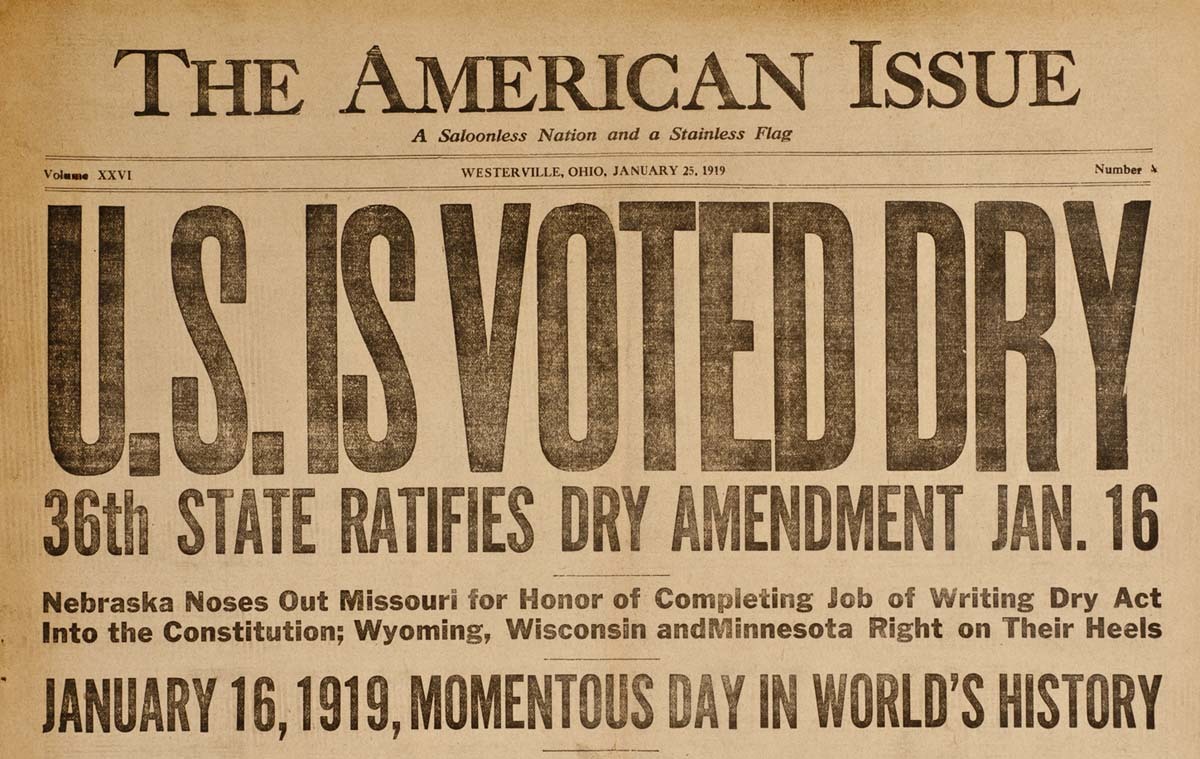
The ASL, under the shrewd and ruthless leadership of Wayne Wheeler, became the most successful single issue lobbying organization in American history, willing to form alliances with any and all constituencies that shared its sole goal: a constitutional amendment that would ban the manufacture, sale and transportation of alcohol. They united with Democrats and Republicans, Progressives, Populists, and suffragists, the Ku Klux Klan and the NAACP, the International Workers of the World, and many of America's most powerful industrialists including Henry Ford, John D. Rockefeller, Jr., and Andrew Carnegie – all of whom lent support to the ASL's increasingly effective campaign.
With the ratification of the income tax amendment in 1913, and the federal government no longer dependent on liquor taxes to fund its operations, the ASL moved into high gear. As anti-German fervor rose to a near frenzy with the American entry into the First World War, ASL propaganda effectively connected beer and brewers with Germans and treason in the public mind. Most politicians dared not defy the ASL and in 1917 the 18th amendment sailed through both houses of Congress; it was ratified by the states in just 13 months.
At 12:01 A.M. on January 17, 1920, the amendment went into effect and Prohibitionists rejoiced that at long last, America had become officially, and (they hoped) irrevocably, dry. But just a few minutes later, six masked bandits with pistols emptied two freight cars full of whiskey from a rail yard in Chicago, another gang stole four casks of grain alcohol from a government bonded warehouse, and still another hijacked a truck carrying whiskey.
Americans were about to discover that making Prohibition the law of the land had been one thing; enforcing it would be another.
ncG1vNJzZmivp6x7sa7SZ6arn1%2Bgsq%2Bu1KulrGegp7yptcGiq6KnnmS%2FsLvTrGSonl2lv7C0yJugraGfow%3D%3D